
Adult in Progress
A Year Without Objects, Circa 2005

Welcome to The Hundred Day Reckoning, a Creative Response to Hard Change, a place for tales about and systems for responding to life’s wild cards. I’m working on something longer right now, so share this, from the year I was 33 and thought I was grown, but it turned out I wanted to be grown differently. The sense of being without objects flared especially hot because I was reworking a memoir called Semiprecious: Notes from a Material World. I had an agent and everything. Anyway, here’s the voice of 20+ years ago me. You could call it an early Reckoning.
2005
This year I lived without objects.
Back in Hebrew School kindergarten, the teacher asked, “If you suddenly had to flee your home and could only take one thing, what would it be?” Most kids said money but I raised my hand high: “My ballerina jewelry box,” I announced, “My grandpa died when I was two and it’s all I have to remind me of him.”
“Wonderful,” said the teacher, “Those are the right values.”
I wonder now what we were studying to ask five-year-olds that particular question. Persecution? Memory? Flight?
What I actually took when I left my home suddenly, without warning, was a red backpack with a laptop, some underwear I hadn’t worn yet, a change of clothing, and the key to a shared safe deposit box. I didn’t think my wife-becoming-ex would go in there and mess with my old stuff, but I wanted access.
I wore running shoes and my grandmother’s locket.
I did not know when I would be back. I can’t say I decided there and then I wouldn’t sleep one more night in the two-family house we’d bought together, fixed up for a tenant, neglected for ourselves. I can’t say I gave up on the bed we chose together at Macy’s during the Memorial Day Sale the year I had a fellowship and our old bed hurt her back and I failed to get the picture until the night she slept on the floor, and I decided we could spend some fellowship money on a bed. I think she’ll get the bed. She’s slept on it alone or with others for the last eight months, squatters rights. Anyway when she left her former lover for me, that lover got the bed and she said the one with moral high ground gets the stuff. That would be her.
I didn’t take a lot of objects. I made appointments throughout the year to go look for my things, targeted collections, usually showing up with a rolling suitcase, grabbing seasonal clothing, necessary files, or true treasures, to be distributed ever more densely in my new boyfriend’s closet. Where I park my things. Where I park the externals that remind me of myself – images of people I know, images I like to look at, religious objects – until I get to unfurl and use them again.
That’s what home is, maybe. A place where you chose the spoons. A place where the items have stories you know. Even if those stories are of garage sales, or of wanting something better, even if the choice was passive, hand-me-down.
If you don’t have your stuff, are you yourself?
Oh, I left my lesbian card back in that house too. Where does that history go? Where lies the truth that I pledged my undying love to another woman? How will that be visible again, how will it be known? After wondering for years about the grandmother who died before I came out, whether I could continue to claim her benevolent approval in my mind, or what about my father who walked me down the aisle before he died? Whom I told we were going to be pregnant soon, she and I? What happens to truth that doesn’t last? Does it become a lie?
I think there is a place for truths that end, and for me that place is called the past. It is true, but in the past. But there ought to be some kind of consensus around a truth and in this case there is no consensus.
No gestapo came to my door, no inquisition, expulsion, nor even eviction. A change in truth, that I did not expect and in fact pledged against, a change in my ability to be true. Nothing pushed me out the door but me. Anger. Curiosity. Clarity. Love.
I started a book that culminates with the things she and I wore to make our bond, the generations of items, the way our legacies burbled around us that wedding day, the sweet outpouring from seventy five souls ready to buoy us. We wrote the vows, and they all signed as witnesses, around a border like a frame, an enormous calligraphed document. She smashed it when I left. Wouldn’t you?
Do I associate the wish for a wedding with the uncertainty of our private bond? There was uncertainty, sure. There was a wish for a wedding, sure. But there was a wish, too, to make our way officially, she and I. To be witnessed. To build a home.
How do I write about our objects? How do I write about separation from my things, the petty, tiny indulgences of being at home? How do I explain the longing for my old mugs, mugs my friend R gave me as a symbol that I too could have home-like possessions, R, who was married with many home-like possessions, and wanted me (then single) to see myself that way? But when I made the appointments to get my stuff, one mug always held coffee. I couldn’t just dump her coffee to grab my mug, until I did.
This time, I gave up on living there again. I gave up on making it my home. I cleared out everything. I want to say: I’ll never take my things around me for granted again. But I know the heart grows fat and slow, like any other muscle.
2026: I stopped that memoir when I realized I didn’t know my own story. I didn’t know my material world, let alone what was precious or semiprecious. More than twenty years later, I live in a home with stuff I love. My boyfriend is my husband. Our son is in college. But I never found a way back to the book, and I still hold that youngish woman, flailing and seemingly failing at adulthood.
Divorce is a common Thing in The Hundred Day Reckoning: a Creative Response to Hard Change, and there’s always a physical story to accompany the emotional one. I know that now, I didn’t then, even though I grew up in a divorced household where items held different charges depending on what marriage begat them.
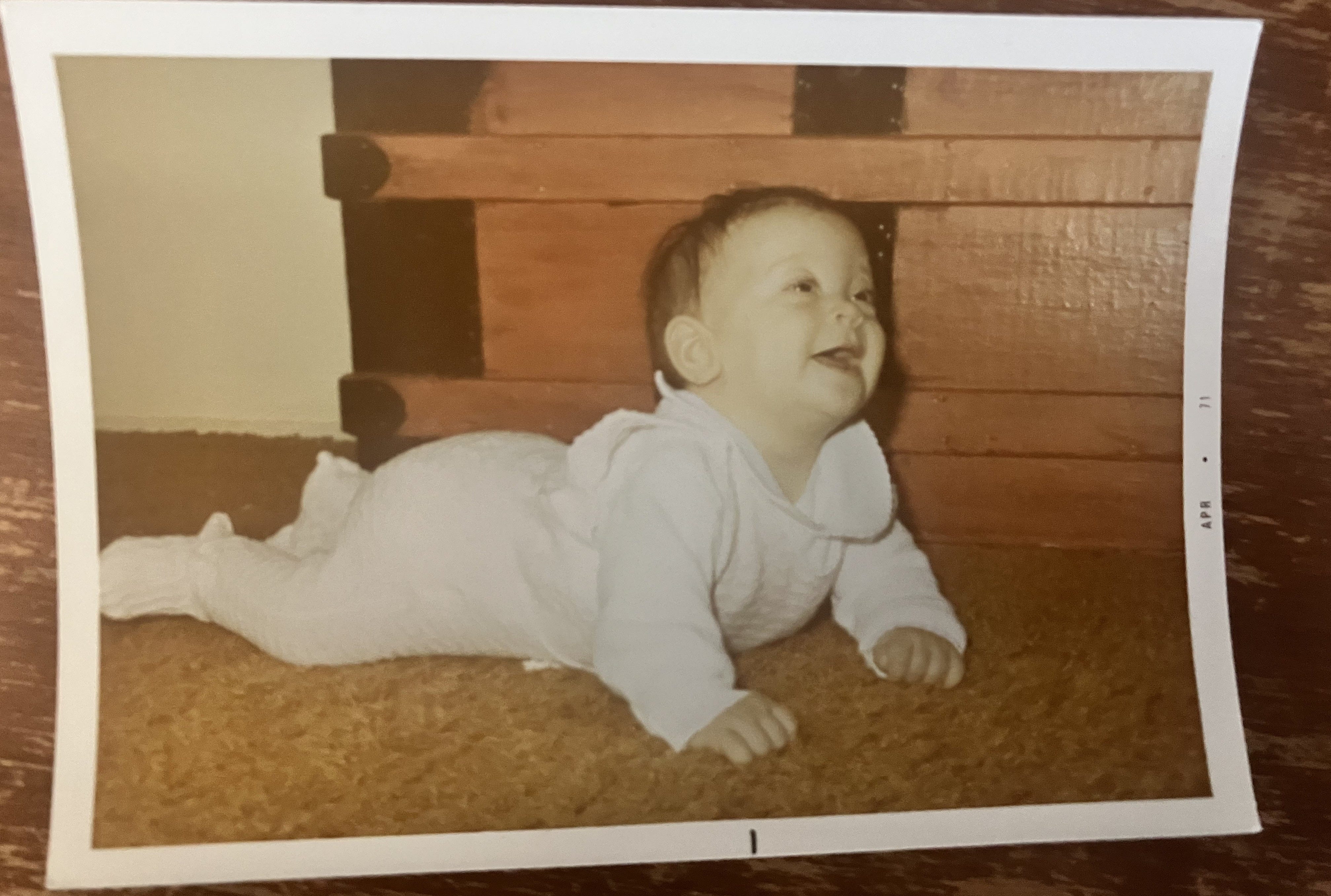
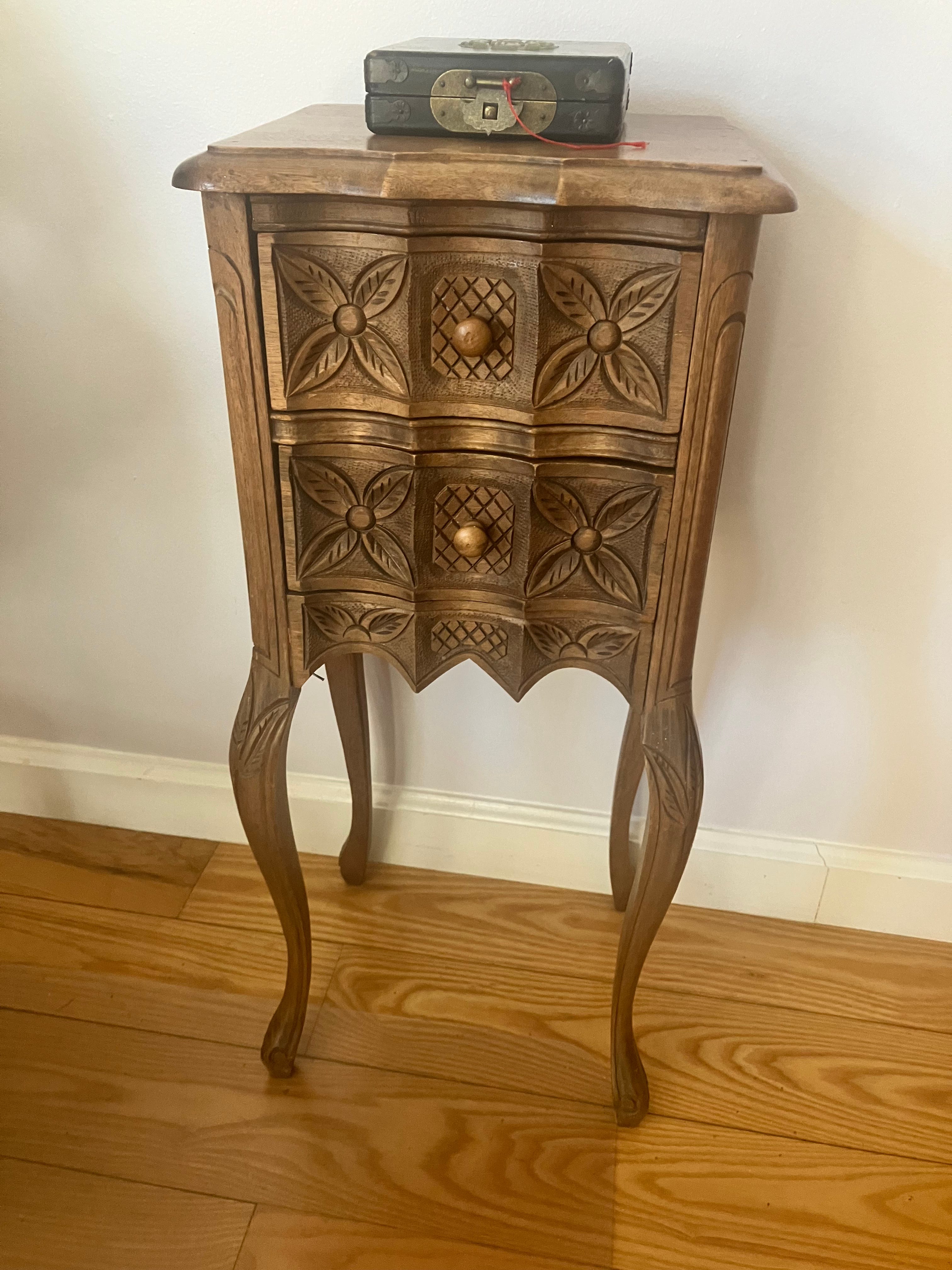
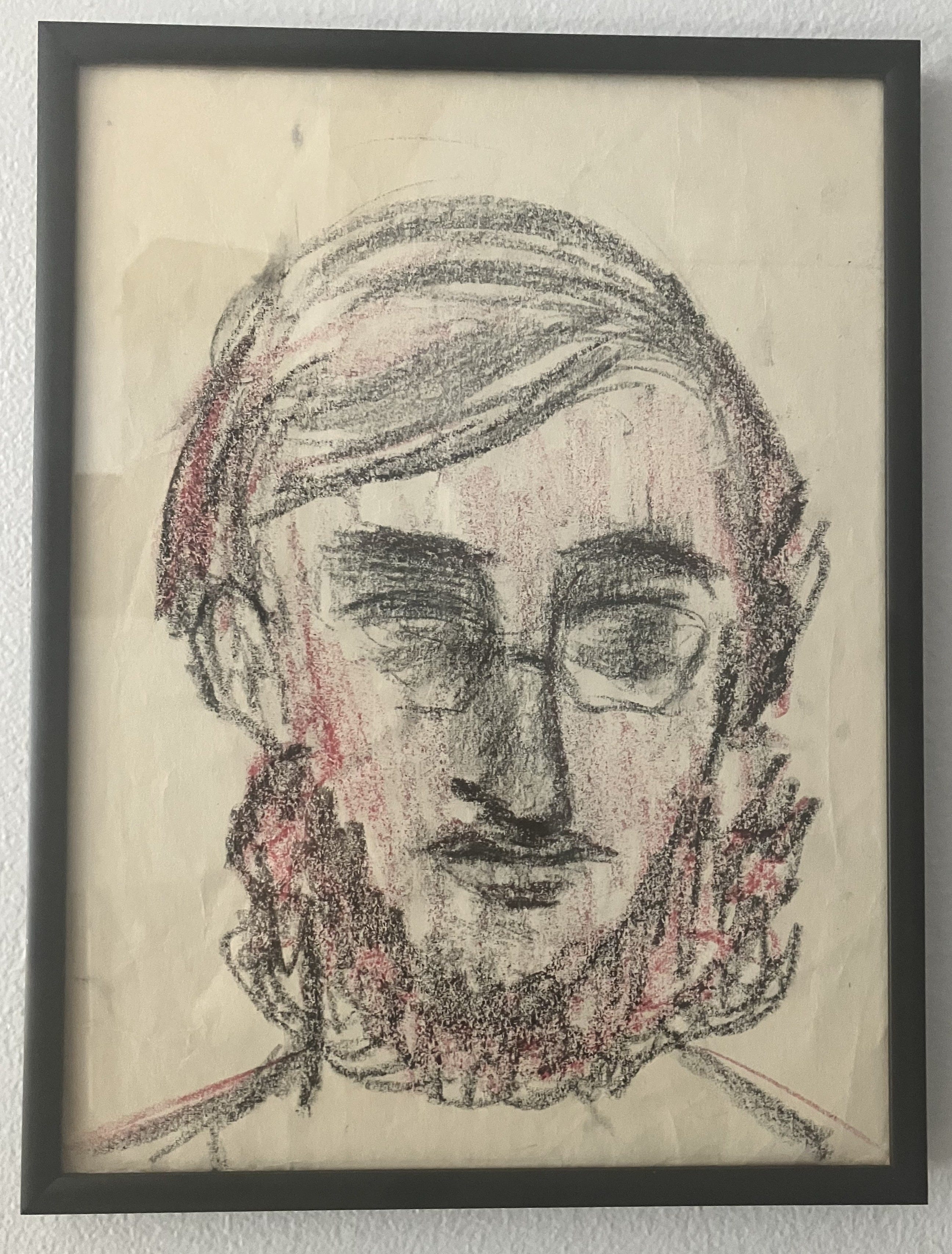
Images in this piece are of objects worked on by my mother Maureen Osterman that now live in my home:
Baby pic of me in front of a trunk she painted.
A tiny dresser she refinished.
A portrait she drew of my father, 1960s.
What role do material objects play in your life transitions? Security? Memory? Totem? What’s the story of your stuff?
Thanks for reading; I’m so glad you’re here! This Wednesday morning post is free as always.
The paid version gets you access to archived writing prompts, and soon, additional features and resources. Most importantly, subscription fees directly support the independent creation of this work, including paying other artists. Please consider an upgrade if you can.
A share, a comment, a little heart, a free subscribe... these are all support too, and very welcome! See you next Wednesday.
Curious about The Hundred Day Reckoning, a Creative Response to Hard Change live on zoom with me? Learn about future sessions here.
I love this, Karen. After packing up all of our "stuff" to go to CA to go help Chris' mom, and then dealing with all of her 50+ years of "stuff" I dreamed of living with a tatami mat and a single exquisite vase like a zen master. But I must say that now that I am reunited with all of the things that Chris and I have amassed together, I realize what joy those things give me. Each thing contains a sweet association, evidence of a joyful life together.
I remember that/your memoir. You read excerpts in the evening I hosted at Low Bar, in Dumbo before it was a playground for rich people.
When my mother died, I got a lot of her stuff. Like A LOT of her stuff. I like to joke that anything nice in our home, in my closet, is Marilyn's: the fine china, the blue glassware, the Gucci skirt, the Vuitton bags, the Shaker rocking chair that she rocked me in when I was a baby and I in turn rocked my son. When my dad died, I was nine and there was no stuff. Or so I was told. My mom had the chance to walk through his mother's house where the remnants of the no-stuff lived. She took two rings of (his U of M class ring and a big Moonstone that might have been his version of his wedding ring?); I have both and laad ast week, when my asked if I had any jewelry he could wear I gave him Harvey's U of M ring. He looked up the value. He told me the numbers, but we both know the value was in a connection to the grandparents he never knew.